
- All
- Product Name
- Product Keyword
- Product Model
- Product Summary
- Product Description
- Multi Field Search
Please Choose Your Language

Views: 0 Author: Site Editor Publish Time: 2026-07-24 Origin: Site


Electrical connections demand absolute precision. A compromised crimp causes severe voltage drops, excessive heat, and major fire risks. The right tool ensures a gas-tight, mechanically sound connection every single time. Unfortunately, many operators rely on standard pliers or mismatched dies. This shortcut inevitably results in under-crimping. Under-crimping causes dangerous wire pull-outs under load. Conversely, over-crimping fractures delicate wire strands. Fractured strands severely weaken the joint and reduce power flow.
This guide details how to correctly align wire gauge (AWG), terminal profiles, and operational volume. You will discover exactly how to choose a reliable cable lug crimper tailored to your daily tasks. We break down the exact differences between manual, ratcheting, and hydraulic options. You will learn how proper die selection prevents devastating electrical failures. Securing a durable connection starts entirely from making the correct tool choice.
Tool selection must strictly follow the AWG of the stranded wire; "one-size-fits-all" tools often fail on high-gauge battery cables.
The choice between manual and hydraulic mechanisms depends on the required crimp force (especially critical for 4 AWG and larger) and operator fatigue.
Matching the crimping die profile (hex vs. indent) to the specific terminal type is non-negotiable for compliance and vibration resistance.
A dedicated 10-1 AWG crimper is typically sufficient for mid-range electrical work, but heavy-duty automotive or marine applications require specialized tonnage.
Achieving a true cold-weld proves critical for long-term safety. This mechanical process completely eliminates microscopic air gaps inside the terminal barrel. Air gaps invite ambient moisture. Moisture rapidly leads to oxidation on the copper strands. Once oxidation occurs, electrical resistance spikes dramatically. High resistance generates intense heat under heavy electrical loads. Proper cold-welding bonds the copper strands together into a nearly solid metal mass. This solid mass guarantees unhindered electrical conductivity.
Regulated environments demand strict adherence to technical standards. Think of marine installations or recreational vehicle electrical builds. These vehicles face constant, harsh physical vibrations on a daily basis. Uncalibrated tools create weak joints. Weak joints quickly vibrate loose on rough water or bumpy roads. This mechanical failure exposes you to massive safety liabilities. Adhering strictly to compliance standards mitigates these severe risks.
Subpar tooling creates incredibly expensive downstream issues. You face high labor and material costs. Replacing burnt lugs eats directly into project budgets. Diagnosing intermittent electrical faults consumes hours of valuable troubleshooting time. A loose connection might only fail under specific thermal loads. Finding that specific fault point frustrates even experienced technicians. Investing in reliable equipment eliminates these invisible, creeping expenses.
Defining this exact wire range helps operators select the correct gear. A dedicated 10-1 AWG crimper perfectly handles standard residential grounding wires. You will also use it heavily for light automotive wiring and solar panel setups. These tasks require precise, repeatable hand actions.
Ratcheting mechanisms prove entirely critical here. They guarantee a full crimp cycle completes before the jaws release. This built-in safety check stops users from applying half-hearted pressure. It protects the physical integrity of every mid-range connection. Operators cannot prematurely open the tool. This forces a complete, standardized compression every time.
Thick copper strands demand massive physical force. Manual leverage quickly reaches practical physical limits. Human hands simply cannot generate enough pressure to deform thick-walled copper. Attempting this causes severe hand fatigue and incomplete compression.
For these demanding jobs, you need serious mechanical power. A specialized battery cable lug crimper becomes absolutely necessary. It safely compresses high strand counts into tight barrel spaces. This specialized equipment handles the intense physical demands of heavy gauge wiring. It ensures thick-walled terminals deform evenly around the conductor core. This creates the essential gas-tight seal.
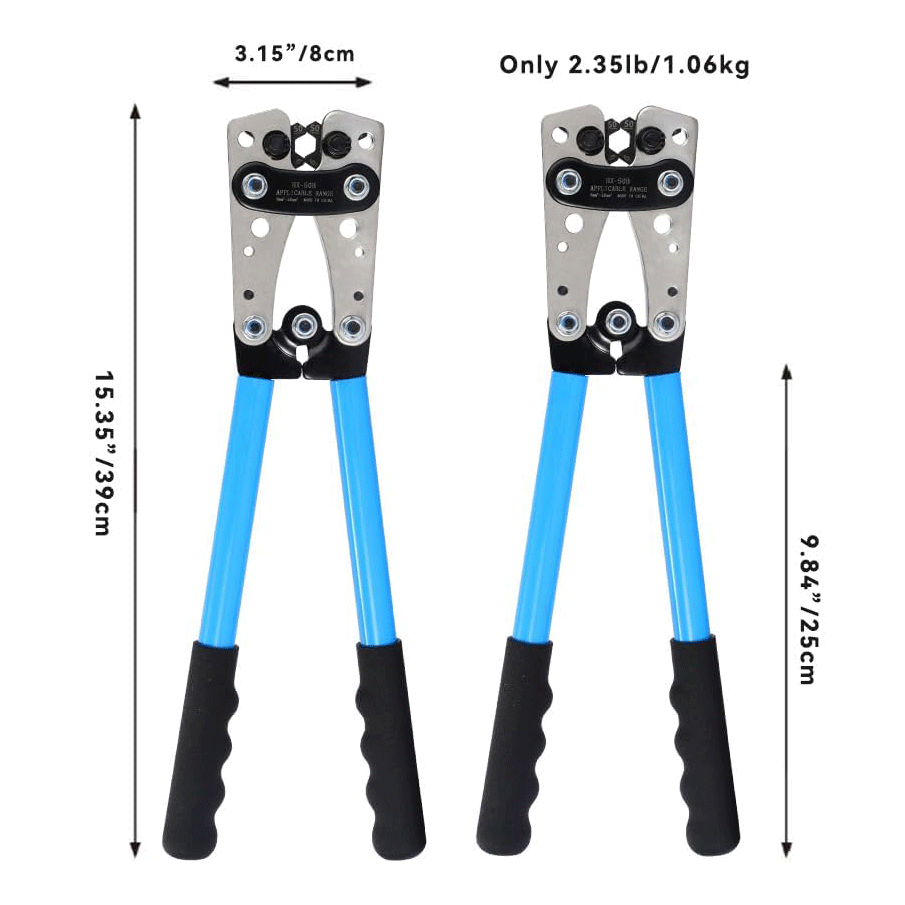
Manual lever tools perform best for low-volume tasks. Field repairs benefit greatly from their lightweight portability. They work well for smaller AWG ranges where force requirements remain low. You can easily store them in a basic tool belt.
However, noticeable limitations exist. Connection quality heavily depends on operator strength. Hand fatigue sets in quickly during repetitive tasks. This fatigue creates a high risk of inconsistent joints. A tired operator will instinctively apply less pressure. This leads directly to dangerous wire pull-outs.
These tools excel at tasks demanding high repeatability. Standardized quality control strictly requires operational consistency. Ratcheting models offer a distinct, powerful advantage.
Their built-in release mechanism acts as a foolproof physical check. You cannot open the jaws until the compression cycle entirely finishes. This strictly prevents under-crimping errors. The tool dictates the minimum force applied. It completely removes human error from the compression phase.
Hydraulic models handle thick gauges ranging from 4 AWG to 4/0 AWG. High-volume commercial installations rely heavily on their immense power. Their structural advantages are undeniable. They deliver consistent, massive tonnage upon the terminal.
Standard models easily output between 8 to 16 tons of force. They require minimal physical effort from the human operator. You definitely need this capability when functioning as a heavy-duty system. Consider necessary maintenance carefully. Watch for minor fluid leaks over time. Seal degradation occurs naturally through heavy use. Regular calibration checks keep the output force highly accurate.
Performance Chart: Tool Mechanism Output vs. Use Case | |||
Mechanism Type | Ideal AWG Range | Force Output Level | Best Use Case |
|---|---|---|---|
Manual Lever | 10 - 6 AWG | Low (Operator Dependent) | Occasional field repairs |
Ratcheting | 10 - 1 AWG | Medium (Regulated) | Standardized volume tasks |
Hydraulic | 4 AWG - 4/0 AWG | High (8-16 Tons) | Heavy commercial installs |
Hex dies compress the lug evenly from all six sides. They push the metal smoothly toward the center core. This action maintains the structural integrity of the thick barrel. It proves best for heavy-duty applications. A hex shape avoids piercing the metal surface.
Indent dies function entirely differently. They focus intense force onto a single punch point. We often call them punch dies. They work highly effectively for solid wires. You will also use them on specific thin-walled terminals. The single punch deeply embeds the metal into the wire core.
Every terminal shape requires highly specific handling. A copper tube terminal crimper needs exact die matching. Mismatched dies will quickly crack the seamless copper tube. Cracks invite rapid interior corrosion.
Next, carefully consider insulated components. Ensuring the die accommodates the insulation sleeve proves vital. The die shapes must hold the sleeve securely. They must do this without crushing the barrel underneath. You cannot sacrifice the insulation to achieve a tight grip.
Mixing mechanical standards causes immediate and dangerous failures. Using metric (DIN) dies on AWG wire creates loose fits. The sizing simply does not align properly. Furthermore, mixing stranded wire into solid-wire connectors guarantees poor electrical contact. Solid connectors cannot grip fine strands correctly.
Lugs come in several distinct variations. They might be bare copper, tin-plated, or pre-insulated. Adjust your tool selection accordingly. Tin-plated lugs require different pressure profiles than thick pre-insulated types. Ignoring these material differences leads to severely compromised joints.
Always inspect the finished joint closely. We recommend a few essential verification tactics.
Visual Inspection: Look closely for "dog ears" or metal flash extruding from the sides. These sharp edges indicate oversized dies or severe over-crimping.
Mechanical Testing: Follow established mechanical pull-testing standards. They prove the physical strength of the joint under heavy stress.
Destructive Testing: Commercial quality control often requires physical cross-sectioning. Cutting the joint open reveals the internal cold-weld quality. You should see a solid mass of copper without any air gaps.
Quality Verification Matrix | ||
Defect Type | Visual Indicator | Root Cause |
|---|---|---|
Over-Crimping | "Dog ears" (metal flash) | Die size too small for AWG |
Under-Crimping | Loose wire pull-out | Die size too large / low force |
Insulation Damage | Cracked or pierced sleeve | Using uninsulated dies on insulated lugs |
Selecting the optimal equipment eliminates major safety hazards. You protect your electrical systems from heat damage and catastrophic failure. Follow a strict shortlisting logic to find the exact match.
Identify the exact AWG range required for your primary tasks.
Determine the terminal type accurately (copper tube versus standard ring).
Assess the expected volume. Choose manual or ratcheting for occasional use. Choose hydraulic for continuous use or massive gauges.
Audit your current tooling against the specific wire types used in upcoming projects. Prioritize tools offering interchangeable, clearly marked dies. Ensure you discard any damaged or uncalibrated equipment immediately. Upgrading your gear directly improves connection safety and overall project longevity.
A: Hammer tools completely lack necessary repeatability. Striking the tool delivers highly uneven force. This action risks physically damaging the lug. It completely fails to provide the true gas-tight connection required for professional applications. You cannot accurately measure or replicate the pressure applied by a hammer blow.
A: Yes, you do. A ring terminal crimping tool for insulated connectors uses smooth, oval dies. These carefully avoid piercing the delicate insulation sleeve. Conversely, uninsulated tools use a single sharp indent or a tight hex die. Using an uninsulated die on an insulated terminal destroys the protective casing.
A: Always check the manufacturer specifications first. Thick-walled copper tube terminals often require higher force. They may even require a die one size larger than standard automotive lugs of the exact same AWG. Assuming all terminals of a specific gauge share the same outer diameter leads to severe under-crimping.
A: Several technical factors cause this failure. Common issues include under-tonnage from weak manual tools. Mismatched die sizes leave too much space inside the barrel. Additionally, using cables covered by thicker insulation physically restricts full die closure. Ensure the tool jaws close completely during operation.


