
- All
- Product Name
- Product Keyword
- Product Model
- Product Summary
- Product Description
- Multi Field Search
Please Choose Your Language

Views: 0 Author: Site Editor Publish Time: 2026-04-06 Origin: Site


One terminal may look much like another on a product page, but the wrong choice can create extra work, poor fit, or an unreliable connection on the actual job. At FSE Tools, we help customers compare electrical wire terminals for practical uses such as panel wiring, equipment maintenance, automotive repair, and general electrical assembly. This guide focuses on the main terminal types buyers see most often, how they differ, and how to narrow the options without turning a simple buying decision into guesswork.
Most buyers start with the shape, but shape is only part of the story. The real differences usually come from the way the terminal connects, whether it is insulated, and what kind of wire or application it is meant to support. Those three points explain why one product works better than another even when both appear similar at first glance.
The connection point is usually the first clue. Some terminals are made to fasten under a screw or stud, some are designed to insert into terminal blocks, and some are mainly used to keep stranded wire together before insertion. Once the connection point is clear, the list of suitable options becomes much shorter.
Insulation is the next factor. Insulated electrical wire terminals are often chosen for easier handling, cleaner installation, and better protection in working environments where exposure or vibration matters. Non insulated electrical wire terminals can be a better fit when space is limited or when the installer wants to add heat shrink after crimping. The better choice depends on the job, not simply on appearance.
The wire itself also matters. Stranded wire often benefits from a termination style that keeps the conductor neat and controlled. A fixed stud connection asks for something different from a tidy panel entry. Buyers usually make better decisions when they begin with the wire and the application, then move to the terminal form.
Ring electrical wire terminals are among the most widely used terminal types because they offer a clear practical benefit: secure fastening. The ring end fits over a screw or stud, and once fastened, the connection stays in place more securely than an open-ended alternative. That makes ring terminals a dependable choice where stability matters.
They are commonly used for grounding points, battery leads, fixed equipment connections, and other jobs where vibration resistance is important. In automotive systems and industrial equipment, buyers often prefer ring terminals because the connection is less likely to loosen or shift during service when properly installed.
Ring terminals also make sense from an installation point of view. They are easy to position, easy to identify, and well suited to maintenance work where the fastening point is already defined. For many buyers, once the job involves a screw or stud connection, the ring terminal quickly becomes the most logical option.
Pin electrical wire terminals are designed for a different purpose. Instead of wrapping around a fastening point, they create a neat, compact end that can be inserted into terminal blocks or similar clamped connection points. This makes them especially useful in control cabinets, organized panel wiring, and other applications where neat wire entry matters.
A pin terminal is often helpful when a bare stranded conductor would be harder to guide into place. By giving the wire a clean end, the installer can achieve a more controlled and professional result. That can improve both appearance and consistency, especially in jobs with repeated terminations.
For customers comparing product options, pin terminals are a strong fit when the connection point is not a stud or screw but a clamp-style entry instead. In those cases, they provide a cleaner and more practical solution than trying to insert untreated wire ends.
Insulated cord end terminals are especially valuable for stranded wire. Stranded conductors are flexible, but the strands can spread or bend during installation, making insertion less tidy and less consistent. A cord end terminal gathers those strands into one controlled end, which helps create a cleaner connection.
This type is often used in terminal blocks, panel wiring, integrated wiring work, and maintenance projects where a neat finish matters. The benefit is not just visual. Better wire control can also support easier insertion and more consistent clamping.
For buyers who want a clean, orderly result in electrical panels or similar installations, insulated cord end terminals are often one of the most useful product types in the category.
Terminal Type | Best Connection Point | Main Advantage | Common Use Case |
Ring electrical wire terminals | Studs and screw posts | Secure fastening | Grounding, battery leads, fixed equipment |
Pin electrical wire terminals | Terminal blocks and clamped entries | Neat insertion | Control panels, cabinet wiring |
Insulated cord end terminals | Terminal blocks for stranded wire | Keeps strands together | Panel assembly, maintenance wiring |
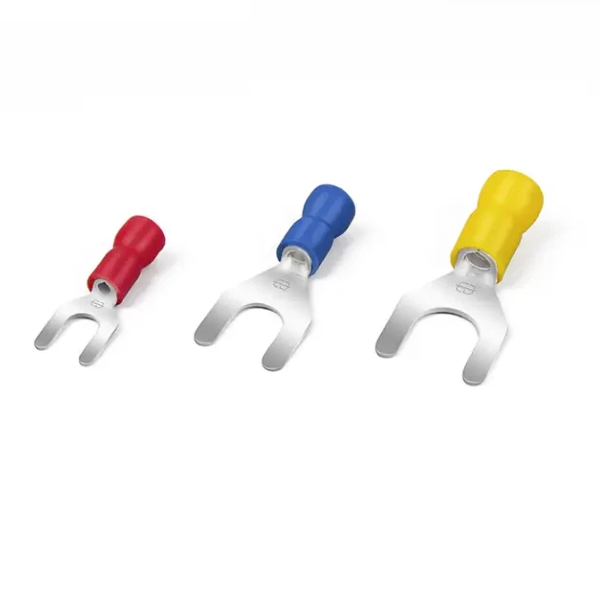
Insulated electrical wire terminals are often chosen because they support a more controlled installation process. The insulation helps with handling, gives the connection a cleaner finish, and can offer added confidence where accidental contact, movement, or service exposure is a concern.
They are often a practical option in automotive wiring, mobile equipment, maintenance jobs, and general electrical work where the environment is less predictable. For many buyers, the advantage is simple: easier installation and a more protected finished connection.
They are also useful when buyers want a straightforward solution without adding extra finishing steps. That convenience is one reason insulated terminals remain popular across many routine wiring applications.
Non insulated electrical wire terminals can be the better choice when the installation space is tight or when the buyer wants more flexibility in how the final connection is finished. Their profile is often more compact, which can matter in denser assemblies.
They also work well when the installer prefers to add heat shrink or other protection after crimping. This approach gives more control over the final result and can suit jobs where a customized finish is preferred.
Rather than thinking of insulated and non-insulated styles as direct substitutes, it is better to see them as different tools for different conditions. One offers convenience and built-in protection, while the other offers compact size and more finishing flexibility.
Automotive wiring often involves movement, vibration, and repeated service conditions. In these jobs, ring electrical wire terminals are a common choice for grounding points, battery-related connections, and other fastening locations where a stable connection matters.
Insulated electrical wire terminals are also widely used in this area because the installation often benefits from a more protected and easier-to-handle termination. When the environment is active, a secure and well-finished connection becomes even more important.
Control panel work usually places more value on clean layout and consistent wire entry than on heavy mechanical fastening. That is where pin electrical wire terminals and insulated cord end terminals are especially useful. They help create neat, organized terminations and support a more professional panel layout.
This matters for both installation and maintenance. A clean panel is easier to inspect, easier to service, and often easier to troubleshoot later. Buyers working with terminal blocks usually benefit from choosing products that support that level of order from the start.
Home repair and appliance wiring often call for terminals that are easy to understand and easy to install correctly. The right option depends on the actual connection point, but ring terminals and insulated designs are often practical choices because they are straightforward to use and well suited to many common repairs.
For these buyers, product clarity matters. A terminal that matches the connection point clearly can save time and reduce installation mistakes.
Outdoor systems and high-vibration jobs demand closer attention to fastening method and insulation. Ring terminals often work well where a fixed screw or stud connection is needed, while insulated options are helpful when the connection may face exposure, movement, or regular handling.
The key point is that the service condition should guide the selection. A terminal should be chosen for the real environment, not only for its catalog appearance.
A good buying decision usually begins with the wire. Check the wire size, then consider whether the conductor is stranded or solid. After that, look at the connection point. If it is a stud or screw, ring electrical wire terminals may be the best fit. If the wire needs to enter a terminal block neatly, pin electrical wire terminals or insulated cord end terminals may make more sense.
This simple sequence removes a lot of uncertainty. Instead of comparing every terminal style on the page, buyers can focus on the options that actually suit the job.
Once the wire and connection point are clear, think about the working environment. If the job involves vibration, movement, or a need for easier handling, insulated electrical wire terminals are often the stronger choice. If space is tight or the finish will be customized later, non-insulated options may be more suitable.
A terminal is only effective when it fits the full installation method. That is why the best product choice usually comes from looking at the wire, the connection, and the service condition together.
A practical buying path is easy to follow: identify the wire, identify the connection point, check the environment, and then choose the insulation level and terminal form. This approach helps buyers move from general browsing to a more accurate product decision.
For customers reviewing the FSE Tools range, this method makes it easier to compare options based on real application needs instead of guesswork.
Knowing the main types of electrical wire terminals helps buyers choose more confidently and avoid mismatched products. The right terminal depends on how it connects, how the wire behaves, and where the finished connection will be used. FSE Tools develops professional electrical connection products for practical wiring work, and the right solution often becomes clear once those basics are understood. If you are comparing options for your next project, explore our range of wire terminals and contact us for product support and application guidance.
The most common types include ring electrical wire terminals, pin electrical wire terminals, and insulated cord end terminals. Each one suits a different kind of connection point and wiring task.
Ring terminals are usually used where the wire must be fastened securely under a screw or stud. They are common in grounding, battery connections, and fixed equipment wiring.
They keep the wire strands together, which helps create a cleaner end for insertion into terminal blocks and improves consistency in panel wiring.
Choose insulated terminals when easier handling and added protection matter. Choose non-insulated terminals when space is limited or when you want to add your own heat shrink or finishing after crimping.


