
- All
- Product Name
- Product Keyword
- Product Model
- Product Summary
- Product Description
- Multi Field Search
Please Choose Your Language

Views: 0 Author: Site Editor Publish Time: 2026-08-17 Origin: Site


While manual cable tie installation suffices for occasional use, relying on hand-tightening in high-volume industrial, automotive, or aerospace applications introduces severe risks. Operators face problems regarding tension consistency, rapid hand fatigue, and strict compliance failure. To solve these critical issues, professionals rely on a cable tie tensioning tool. We define this instrument as an engineered hand-held or pneumatic device. It applies a precise, repeatable amount of tension to a cable strap. It then automatically severs the excess tail entirely flush with the head. Transitioning to the commercial reality means you must evaluate specific features carefully. Selecting the right equipment requires assessing tension control, material compatibility, and ergonomic benefits. Doing so successfully mitigates assembly line errors and drastically reduces workplace injuries. You will learn exactly how to categorize these devices, evaluate their technical dimensions, and deploy them properly across demanding environments.
Purpose: Tensioning tools eliminate the sharp, dangerous edges left by manual clipping while ensuring uniform pressure across delicate wire bundles.
Specialization: Tools are highly specialized by material; a nylon cable tie gun cannot process heavy-duty metal ties, and vice versa.
ROI Driver: The primary commercial value lies in reducing repetitive strain injury (RSI) for operators and minimizing rework caused by over-tightened or under-tightened bundles.
Evaluation Focus: Procurement decisions should hinge on volume requirements (manual vs. pneumatic), material (plastic vs. steel), and tension consistency mechanisms.
Relying on pliers or manual pulling mechanisms creates bottlenecks in modern assembly operations. Manual methods introduce human error, compromise safety, and generate hidden operational inefficiencies across the production floor.
When operators pull ties by hand, they apply highly variable force. This creates severe inconsistencies across delicate wire bundles. Under-tensioning leads to immediate slippage. In high-vibration environments like automotive engine bays or aerospace chassis, loose ties fail to secure components. This failure causes wire chafing and dangerous electrical shorts. Conversely, over-tensioning causes severe structural damage. Too much pressure crushes sensitive wire insulation. It distorts internal fiber optic jackets and degrades signal integrity in category network cables. Hand-tightening simply offers zero repeatability across hundreds of application cycles.
Manual clipping introduces major safety risks to downstream personnel. Standard diagonal cutters leave a sharp plastic or metal protrusion at the tie head. Industry professionals often call this a "pig-tail." This sharp edge acts like a fixed razor blade inside tight equipment racks. It remains a primary cause of lacerations for downstream maintenance workers. Whenever technicians reach into dark enclosures, these edges cause severe cuts. Eliminating these protrusions completely is critical for occupational safety compliance.
Manual tensioning requires highly repetitive twisting and pulling motions. Over an entire shift, this creates massive ergonomic hazards. Repetitive manual tensioning and cutting leads to cumulative trauma disorders for assembly line technicians. Carpal Tunnel Syndrome frequently affects manual operators. These debilitating injuries drive up worker's compensation claims significantly. They also reduce overall manufacturing productivity. Replacing manual pulling with mechanical assistance directly mitigates these severe ergonomic risks.
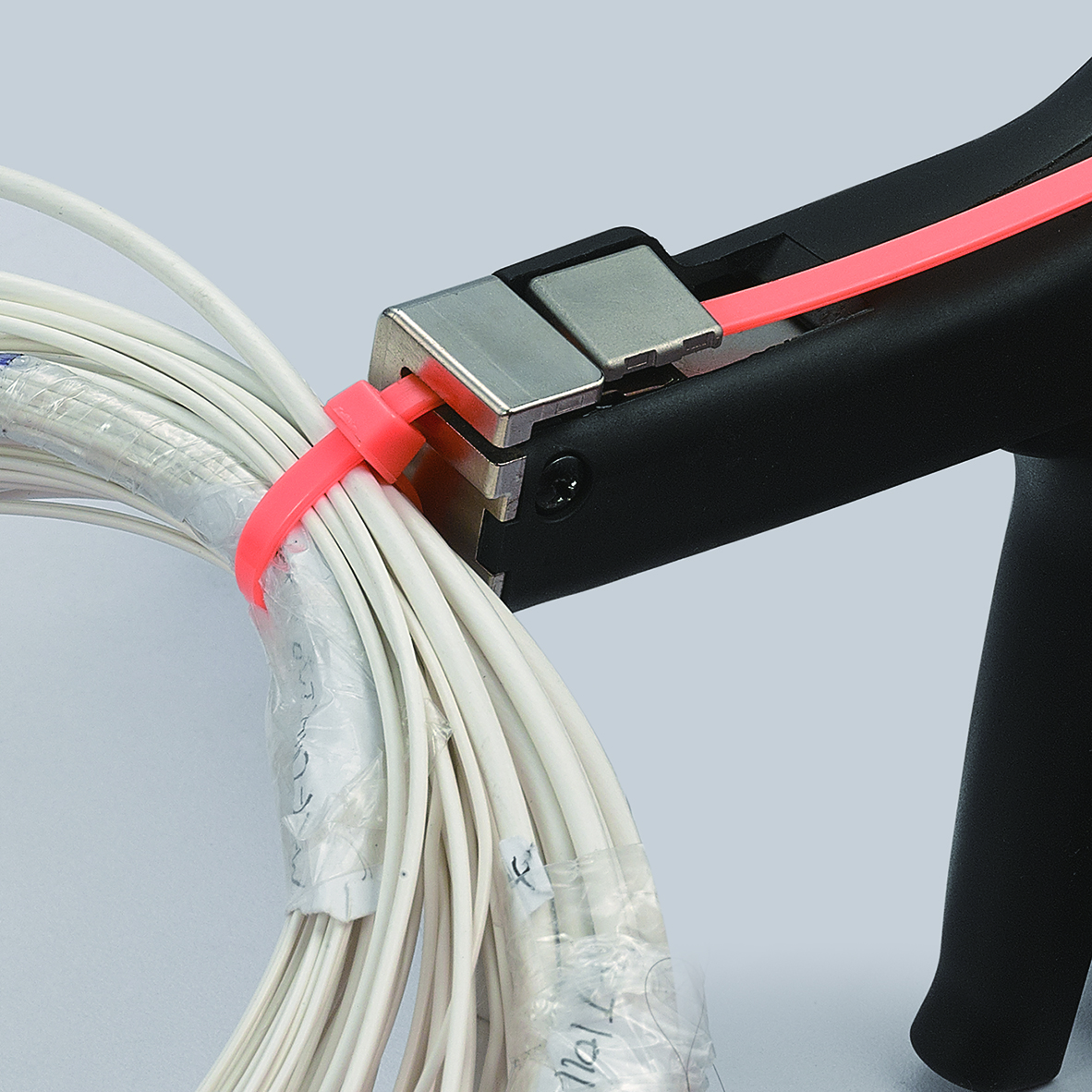
Hardware specialization ensures proper application across different industrial sectors. You cannot use a universal approach when securing delicate data cables versus heavy pipeline brackets.
Most standard manufacturing applications require lightweight, agile equipment. A nylon cable tie gun is calibrated specifically for plastic and nylon fasteners. Manufacturers build these devices with lightweight composite polymers to reduce hand fatigue. They usually feature adjustable tension dials near the grip. These dials allow operators to accommodate different tie widths seamlessly. You can process standard ties ranging from 18 lb to 120 lb tensile strength without snapping the band. An internal clutch ensures the mechanism stops pulling once it reaches the designated threshold.
Extreme operational environments demand incredibly robust materials. Marine offshore rigs, chemical processing plants, or sprawling solar installations rely heavily on metal fasteners. A specialized stainless steel cable tie tool processes these heavy-duty variants effectively. Metal ties require significantly higher pulling forces to secure properly. These heavy-duty tools utilize hardened steel grippers inside the nose. They feature specific cutting mechanisms designed to shear tough stainless steel bands cleanly. Attempting to process steel straps with standard plastic-rated equipment instantly destroys internal springs and blades.
Operational volume strictly dictates your required power source. Making the wrong choice leads either to exhausted operators or wasted capital expenditure.
Feature | Manual Tools | Pneumatic/Battery Tools |
|---|---|---|
Best Application | Ideal for maintenance, repair, and operations (MRO) or low-volume assembly. | Essential for OEM mass production and continuous assembly lines. |
Power Source | Relies entirely on operator hand strength and grip. | Uses compressed air lines or lithium-ion batteries. |
Operation Mechanism | Requires manual squeezing to ratchet tension and cut. | Triggers the tension-and-cut cycle with a single button press. |
Ergonomic Benefit | Moderate. Better than pliers, but fatigue occurs at high volumes. | Maximum. Eliminates hand fatigue completely during long shifts. |
Procuring reliable hardware requires a strict evaluation process. You must look past basic aesthetics and focus on mechanical precision, durability, and operator comfort to ensure long-term success.
Consistent pulling force defines professional wire management. Look for tools offering measurable, lockable tension settings. The internal mechanism must consistently reach the set tension before the integrated blade engages. Accurate, lockable dials prevent operators from accidentally altering the settings during rapid production cycles. Proper calibration protects delicate wire bundles from crushing forces while ensuring rigid holding power.
You must evaluate the integrated blade mechanism thoroughly. A compliant device must cut the tail absolutely flush with the tie head. It must leave zero recess or protrusion. Flush-cut reliability guarantees the safety of the entire installation. High-quality devices integrate a cable tie cutter that shears the band cleanly without twisting it. Strict military and aerospace standards (such as SAE AS23190) strictly mandate completely flush cuts to prevent personnel injury and wire jacket abrasion.
Operator comfort translates directly into operational efficiency. You must assess the grip size, trigger pull weight, and overall balance. A heavy, unbalanced fastening tool rapidly drains operator stamina and slows down assembly rhythms. Tools featuring a shorter trigger reach significantly reduce operator hand strain over an 8-hour shift. Modern designs incorporate padded polymer grips and optimized center-of-gravity profiles to minimize unnatural wrist extension.
Factory floors expose equipment to harsh drops, heavy vibrations, and chemical exposure. For harsh industrial environments, prioritize housing durability above visual appeal. Select tools utilizing cast metal housings or impact-resistant polymer bodies. Ensure the device features easily replaceable cutting blades. Dropping a tool off a workbench should not permanently misalign the internal tensioning clutch. Robust external construction ensures longevity in demanding operational settings.
Purchasing the equipment represents only the first step. Proper deployment requires managing calibration schedules, training personnel, and maintaining vital consumable components.
Mechanical springs and internal clutches degrade over millions of cycles. High-use tools inevitably lose tension accuracy over time. Industry professionals recognize this phenomenon as calibration drift. You must factor in the ease of field-calibration when selecting models. Check if the manufacturer offers formal recertification programs. Quality assurance teams must periodically test the tension output using digital force gauges to ensure bundles remain secure.
Equipment fails repeatedly when users misunderstand its core function. Misunderstanding tension dials often leads operators to set the tool to maximum. They mistakenly believe tighter is always better. This action defeats the entire purpose of precise tensioning and risks severe wire damage.
Best Practice: Establish clear standard operating procedures (SOPs). Color-code tension dials to match specific cable bundle types on the assembly line.
Common Mistake: Allowing uncertified operators to adjust tension dials dynamically. Always lock the tension setting for specific workstations.
Sharp internal blades eventually dull through repeated use. Cutting hard materials accelerates this mechanical wear. Blades wear out quite rapidly, especially on a heavy-duty metal processor. Ensure replacement blades are readily available in your inventory. Maintenance teams must be able to swap blades out quickly on the floor. They should perform this action without returning the entire tool to the manufacturer. Proper consumable management prevents unexpected production bottlenecks.
Matching the specific tool to your exact operational environment guarantees the best return on investment. Use these logical frameworks to narrow down your hardware choices.
Facility maintenance and repair operations rarely require automated setups. Prioritize versatile, manual nylon tensioners. Choose models featuring broad tension ranges and ergonomic grips. These lightweight devices easily handle diverse repair tasks across the entire facility.
Mass production demands extreme speed and total operator protection. Calculate the operational ROI of pneumatic tools carefully. Compare the initial capital expenditure against the projected reduction in labor time. Factor in the total elimination of repetitive strain injury downtime. Pneumatic systems drastically accelerate production rhythms.
Offshore rigs, solar farms, and chemical plants destroy standard polymers rapidly. Restrict your shortlist to highly specialized equipment. Select tools featuring corrosion-resistant components and heavy-duty shearing capabilities. These demanding environments exclusively require ruggedized metal processing units.
Do not procure equipment blindly based on catalog specifications. You must define your precise technical requirements before requesting demo units from suppliers. Follow these exact steps:
Audit your current tie materials (plastic vs. steel) and document their tensile strength ratings.
Measure your most common wire bundle sizes to determine the required nose profile of the tool.
Calculate your daily installation volume per operator to decide between manual and pneumatic power.
Request physical demo units and test them on your actual production line to verify flush cuts.
Summary: A cable tie tensioning tool is not a generic accessory, but a critical quality assurance and safety instrument in professional wire management. It provides repeatability that manual pulling cannot match.
Safety First: Eliminating sharp plastic protrusions directly prevents downstream lacerations and protects sensitive wire insulation from abrasion.
Operational Efficiency: Shifting to ergonomic tensioners reduces repetitive strain injuries and keeps your assembly line moving smoothly.
Final Recommendation: Base your procurement strictly on evidence. Test tools on your actual assembly line to verify flush cuts, validate tension consistency, and gather direct operator feedback on ergonomics prior to fleet-wide deployment.
A: No. Nylon tools lack the gripping strength and hardened cutting blades required for metal. Attempting this will immediately break the tool's cutter and internal mechanisms.
A: Most commercial tools feature a numbered rotary dial or a tension knob at the base of the handle. This adjusts the internal spring pressure determining when the cutting blade engages.
A: A flush cut removes the entire tail of the cable tie so it sits perfectly flat with the tie head. This is required in many military, aerospace, and telecom standards to prevent wire chafing and protect personnel from severe cuts.
A: Yes. Frequent cleaning to remove debris, occasional lubrication of moving parts, and periodic blade replacement are necessary to maintain reliable tensioning and clean cutting over the tool's lifecycle.


