
- All
- Product Name
- Product Keyword
- Product Model
- Product Summary
- Product Description
- Multi Field Search
Please Choose Your Language

Views: 0 Author: Site Editor Publish Time: 2026-07-26 Origin: Site


Transitioning from mechanical hand tools to hydraulic solutions changes everything. Operators gain repeatable, high-tolerance terminations. They leave behind the physical fatigue of ratcheting manual tools. We define a hydraulic crimping tool as a specialized device utilizing fluid mechanics. It multiplies manual or battery-driven force. This ensures secure, void-free connections across wires, cables, or hoses. If you want reliable electrical or fluid systems, you need consistent crimps. This article serves as your comprehensive evaluation guide. We break down the mechanical differences between tool types. We explore application boundaries for different terminals. Finally, we outline the exact specifications you need. You will learn how to shortlist the right tool for industrial, automotive, or electrical applications.
Hydraulic crimping tools use fluid pressure to deliver massive force (typically 4 to 16+ tons), creating cold-welded, gas-tight connections.
Selecting between a hand hydraulic crimper and a battery crimping tool depends strictly on project volume, accessibility, and budget.
Tool-to-terminal matching is critical; an 8 ton hydraulic crimper may be ideal for standard electrical lugs but insufficient for heavy-duty industrial hoses.
Evaluating die sets, stroke length, and head rotation prevents under-crimping and ensures compliance with industry safety standards (e.g., UL, NEC).
Understanding the physics of the crimp requires looking inside the tool housing. An internal hydraulic cylinder mechanism drives the entire process. A small reservoir holds hydraulic fluid. An integrated pump injects this fluid into the main cylinder chamber. This simple action multiplies force exponentially. The pressurized fluid pushes a piston forward. The piston smoothly drives the crimping dies together around the terminal.
You can see a stark difference when contrasting mechanical and hydraulic operations. Mechanical ratcheting hand tools demand intense physical effort. Users must squeeze handles repeatedly to close the jaws. This causes significant hand and wrist strain over time. Hydraulic systems eliminate this physical exertion entirely. They also guarantee a complete mechanical cycle. Many advanced models feature automatic pressure-relief valves. The tool continuously builds pressure until it reaches the exact maximum force needed. The bypass valve then clicks open automatically.
Consistent pressure ensures strict compliance across your entire workflow. Hydraulic mechanisms ensure uniform die closure every single time. A partial closure leaves air gaps inside the terminal. Uniform closure creates a true cold weld. You need this level of precision to pass rigorous pull-out tests. Gas-tight connections prevent oxidation. They keep electrical resistance low and prevent fluid leaks in high-pressure lines.
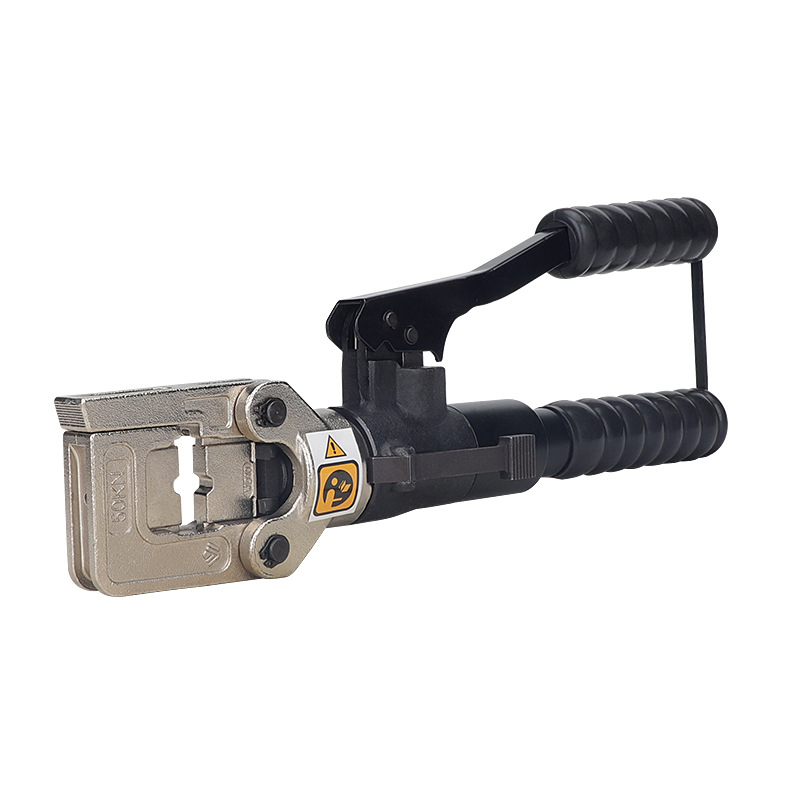
Mobile field teams often rely on a manual hand hydraulic crimper. It remains ideal for low-to-medium volume tasks. Mobile repair technicians prefer it when working off-grid. You cannot always find an outlet to charge batteries on remote job sites. This makes manual fluid power highly dependable.
You benefit from high durability and a lighter overall weight. These tools contain fewer sensitive electronic parts. They survive harsh drop impacts better than motorized versions. However, you must accept some operational trade-offs. The tool requires two-handed pumping to build pressure. Operating it becomes quite difficult inside confined electrical panels or tight trenches.
Modern production environments demand a motorized approach. A dedicated battery crimping tool serves high-volume, repetitive industrial production. Utility line workers use them daily on elevated bucket trucks. They excel wherever efficiency dictates project success.
Operators enjoy true single-handed operation. You position the cable with one hand and activate the trigger with the other. Cycle times drop significantly compared to manual pumping. Premium models even include integrated data-logging capabilities. They record the exact pressure applied during every cycle for strict quality assurance. Trade-offs include managing battery lifecycles on the job. You also carry a heavier tool due to the onboard motor and battery pack.
Comparison of Hydraulic Tool Drive Types | ||
Feature | Hand-Operated | Battery-Powered |
|---|---|---|
Operation Mode | Two-handed pumping | Single-handed trigger |
Cycle Speed | Slow to moderate | Extremely fast |
Portability | High (No charging needed) | Moderate (Requires battery management) |
Data Logging | Not available | Available on premium models |
Different industries require vastly different termination standards. You must align the tool category strictly to the application material.
Electrical jobs demand a precise cable lug crimping tool. We use these extensively for copper and aluminum wire terminations. They secure heavy battery cables and sensitive communication lines. Your primary goal involves creating void-free, gas-tight electrical joints. Trapped oxygen inside a loose connection invites rapid oxidation. Oxidation spikes electrical resistance. High resistance generates dangerous heat and causes thermal failure over time. A proper cold-welded joint eliminates this risk completely.
Fluid systems require a completely different approach. Hydraulic hose crimping involves securing metal fittings onto rubber or PTFE hoses. These systems handle high-pressure hydraulic fluids. Hose crimpers utilize drastically different jaw designs compared to electrical models. They require significantly higher tolerances. A weak hose crimp causes catastrophic fluid blowouts under high pressure.
You face severe mismatch risks if you ignore these distinctions. Never use tools interchangeably across disciplines. Manufacturers design approved die sets for specific terminals. Attempting to crush a high-pressure hose fitting using standard electrical dies leads to disaster. Improper application destroys the fitting integrity. It voids safety certifications and invites immediate system failure.
Establishing a baseline force requirement helps narrow your choices. An 8 ton hydraulic crimper serves as the standard entry point. It handles AWG 12 to 2/0 copper lugs perfectly. This tonnage covers most residential and light commercial electrical tasks.
You must scale up when project demands increase. Thick-walled terminals resist deformation strongly. Step up to a 12-ton or 15-ton model when necessary. You need this massive force for heavy utility cables. Industrial grounding systems also require higher tonnage. A tool lacking sufficient force leaves the terminal under-crimped.
Die geometry dictates the final shape of the connection. You must select dies based directly on the terminal manufacturer's specifications.
Hexagonal Profile: Applies even pressure from all sides. It represents the most common standard for large copper and aluminum lugs.
Indent Profile: Drives a single point deeply into the connector barrel. We use it frequently for fine-stranded wires.
B-Crimp Profile: Folds the metal barrel inward tightly. It works best on specific uninsulated automotive terminals.
Evaluate the die changing mechanism carefully. Pin-release systems offer secure locking but require more manual effort. Slide-in track systems improve workflow efficiency during rapid size changes.
Physical tool dimensions dictate usability in tight environments. Assess head rotation capabilities thoroughly. A 180-degree rotating head offers basic flexibility. A 360-degree rotating head allows you to work seamlessly inside cramped electrical panels or narrow trenches.
Evaluate the maximum stroke length. Compare the jaw opening capacity relative to your maximum cable or hose diameter. A small jaw opening forces you to struggle when inserting thick cables. A wide-opening head accommodates larger splices easily.
Equipment requires rigorous oversight to maintain safety and performance. Preventing over-crimping and under-crimping demands strict attention to detail.
Pressure calibration remains absolutely necessary. A tool losing pressure will inevitably under-crimp terminals. You also risk failure by using unmatched dies and terminals. Mixing brands or ignoring terminal specs violates crucial TE Connectivity and UL standards. A non-compliant crimp fails inspection immediately.
Tool maintenance dictates longevity in the field. Real-world upkeep involves specific procedural checks.
Inspect all O-rings and seals for visible degradation monthly.
Monitor the hydraulic fluid levels and replace the oil according to manufacturer intervals.
Examine the die sets for internal scratching, warping, or excessive wear.
Routine Tool Maintenance Checklist | ||
Component | Inspection Frequency | Action Required |
|---|---|---|
Hydraulic Seals | Monthly | Check for fluid weeping; replace seal kit if leaking. |
Die Sets | Weekly | Inspect for pitting or dimension loss; discard worn dies. |
Release Valve | Before Each Shift | Ensure smooth manual bypass activation without sticking. |
Battery Contacts | Bi-weekly | Wipe clean to prevent power drops during cycle. |
Operator training bridges the gap between good tools and great results. The learning curve involves mastering die alignment. You must seat the terminal perfectly inside the die profile. Operators must learn to recognize the "bypass click" distinctly. Hearing and feeling this pressure release serves as confirmation of a successful cycle. Ignoring alignment or stopping short of the bypass click ruins the connection.
A high-quality hydraulic crimper acts as a direct investment in joint integrity. It protects your operators from severe physical strain. It also shields your infrastructure from the dangers of loose connections. Moving from mechanical effort to fluid power elevates your entire production standard.
Shortlist your tools using strict logic. Map out your primary terminal materials and specific sizes first. Calculate your expected daily crimp volume. Evaluate the spatial constraints of your typical work environment. Use this data to finalize your tonnage requirement and choose your power source confidently.
Take immediate action by auditing your current terminal specifications. Document your wire gauges and metal types. Request technical data sheets for any new tools you consider. Arrange for physical demo units if you plan to invest in high-end motorized models.
A: Generally no. Stainless steel requires significantly higher force and specialized dies. 8-ton models are primarily designed for copper and aluminum electrical lugs.
A: Hex crimps apply uniform pressure from all sides (ideal for standard cable lugs), while indent crimps drive a single point deeply into the connector (often used for fine-stranded or specific aluminum wires).
A: Most manufacturers recommend annual calibration or servicing every 10,000 to 15,000 cycles, depending on environmental conditions and usage intensity.
A: Like all hydraulic systems, O-rings and seals can degrade over years of heavy use or improper storage, requiring inexpensive seal kit replacements to restore pressure.


