
- All
- Product Name
- Product Keyword
- Product Model
- Product Summary
- Product Description
- Multi Field Search
Please Choose Your Language

Views: 0 Author: Site Editor Publish Time: 2026-04-09 Origin: Site


A product page can make terminal selection look easier than it really is. Many buyers compare shapes first, then discover later that the terminal does not match the wire, the connection point, or the working conditions. At FSE Tools, we see this question often from customers looking for electrical wire terminals for panel wiring, equipment maintenance, automotive repair, and general electrical assembly. The good news is that the decision does not need to be complicated. Once you follow a practical sequence and check the right details in the right order, it becomes much easier to identify which terminal really fits the job.
The first step in choosing a terminal is checking the wire itself. A terminal may look strong, well made, and suitable on the surface, but it will never perform well if the barrel does not match the conductor size. When the fit is too loose, the crimp can be weak and unstable. When the fit is too tight, the wire may not seat properly, which can affect both installation quality and long-term reliability. That is why wire gauge should always come before shape, color, or even terminal style.
For buyers comparing options, this point matters because the same terminal family often comes in several sizes. A ring terminal is not simply a ring terminal. A pin terminal is not simply a pin terminal. The correct version depends on the wire range it is designed to support. If that starting match is wrong, the rest of the selection process is already off course.
Conductor material also affects the decision. Electrical wiring jobs can involve different materials and different performance expectations, so the terminal must be compatible with the conductor and with the demands of the connection. A good selection process always begins with the basic physical match between wire and terminal. This may seem simple, but it is where many poor choices begin.
Wire structure matters just as much as wire size. Stranded wire is flexible and widely used in many electrical applications, but its flexibility also means the conductor can spread, bend, or become uneven during insertion. That often makes a controlled termination style more useful. A product that keeps the wire neat and stable can improve both installation quality and the finished appearance of the wiring.
This is one reason cord end terminals are often preferred in panel work and similar applications where stranded wire needs a tidy, reliable end. The goal is not just neatness for its own sake. A better-prepared conductor can be easier to insert, easier to clamp, and easier to maintain later.
Solid wire brings a different set of priorities. It does not usually need the same kind of strand control, so buyers may focus more on the connection point, available space, and fastening method. That is why the question is never just which terminal looks right. The real question is which terminal suits the wire you are actually using.
Once the wire is clear, the next step is the connection point. This is where terminal selection often becomes much simpler. Buyers do not need to compare every option in the category if they first understand how the wire will be attached in the final assembly.
Ring electrical wire terminals are the practical choice when the wire needs to be secured under a screw or stud. Their design supports a stable connection and makes them especially useful where hold strength and connection security matter. Grounding points, battery connections, fixed equipment wiring, and other screw-fastened installations often lead naturally to ring terminals.
Pin electrical wire terminals fit a different kind of job. They are useful when the wire needs a clean, directed end for insertion into a terminal block or similar clamped entry point. In organized panel work, they help create a more controlled layout and can make assembly more consistent. For many buyers, pin terminals solve the problem of getting a neat wire end into the right place without unnecessary difficulty.
Insulated cord end terminals are often the better answer when stranded wire needs tidy insertion into terminal blocks or similar connection points. Instead of leaving individual strands to spread or bend, the terminal gives the conductor a controlled end that is easier to handle and easier to position correctly. In projects with repeated terminations, that consistency becomes a real advantage.
What You Need to Check | Why It Matters | What It Affects in Terminal Selection |
Wire size | The barrel must match the conductor correctly | Terminal size and crimp quality |
Conductor type | Stranded and solid wire behave differently | Need for wire control and terminal style |
Connection point | The terminal must fit the actual attachment method | Ring, pin, or cord end selection |
Working environment | Exposure changes how much protection is needed | Insulated or non-insulated choice |
Installation method | The final crimping process affects performance | Terminal form and tool compatibility |
Maintenance needs | Future service can influence what works best | Accessibility, layout, and fastening style |
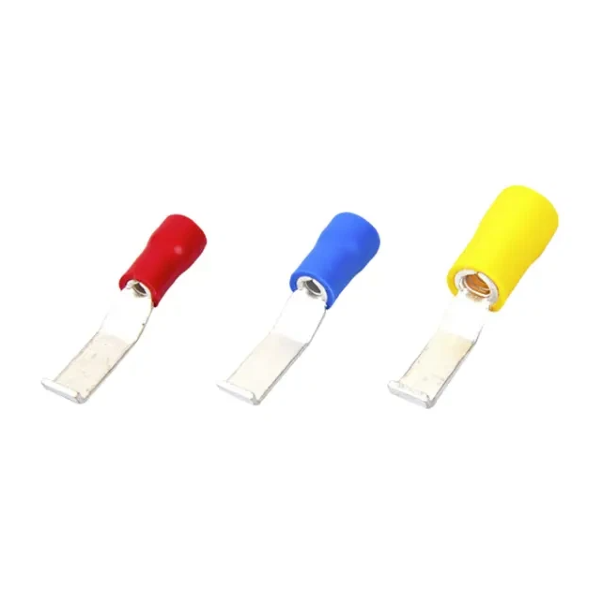
Some jobs demand more than a basic connection. Moisture, vibration, regular handling, or general exposure can all push the buyer toward a more protected terminal design. In these conditions, insulated electrical wire terminals are often the safer and more practical choice. They can support easier handling during installation and provide a cleaner finish where a little more protection is valuable.
This matters in automotive wiring, mobile equipment, service work, and many field installations. Buyers in these areas usually want products that are straightforward to use and that help create a more dependable termination under less predictable conditions. The added insulation can also support a tidier appearance, which is useful in assemblies where the final layout matters as much as the connection itself.
Another reason insulated terminals are popular is consistency. A product that is easier to handle often leads to a smoother installation process, especially when the job involves repeated crimps. For customers trying to reduce installation errors and create more controlled results, insulated designs can be a smart choice.
Non insulated electrical wire terminals are not simply a stripped-down alternative. In many applications, they are the better fit because they offer a more compact profile and greater finishing flexibility. If space is limited, a lower-profile terminal may be easier to route and easier to fit into a dense assembly.
They are also useful when the installer wants to add custom protection after crimping. Some buyers prefer to use their own heat shrink or finishing method to match the needs of a particular job. In that situation, a non-insulated terminal can provide the right starting point without adding bulk that is not needed.
This choice often comes down to installation style. If the job benefits from built-in convenience and easier handling, insulated terminals usually make more sense. If the assembly is compact or the finishing method is more customized, non insulated electrical wire terminals may be the smarter option.
A terminal that goes on easily is not always the best terminal for the full life of the product. Buyers often focus on the first installation, but service access, future replacement, and inspection needs can be just as important. A good terminal choice should support the job after the initial assembly is finished.
Some applications need quick service access. Others need maximum hold strength because the connection should not move once installed. Some panel jobs place a high value on neat wire routing because a clean layout makes later maintenance faster and safer. These needs affect selection. A ring terminal may offer the security needed at a fixed fastening point, while a pin terminal may support a more orderly layout in a control cabinet.
This is where practical product thinking matters. The best terminal is not just the one that fits today. It is also the one that supports the way the connection will be checked, repaired, or serviced in the future. Buyers who think about maintenance early often make stronger decisions and avoid unnecessary rework later.
Terminal performance depends on more than the part itself. Even a well-matched terminal can perform poorly if the crimping approach is inconsistent. That is why terminal selection and installation method should be considered together from the beginning.
The barrel must match the wire, but the installation process must also suit the terminal style. A clean, reliable crimp comes from the right preparation, the right fit, and a suitable crimping method. Buyers who treat these as separate decisions often end up with results that are less consistent than expected.
This does not mean the article needs to become a tool discussion. The main point is practical: a terminal should be chosen with the actual installation process in mind. Customers exploring FSE Tools products often benefit from reviewing the terminal together with the intended crimping approach so the final connection is not only well chosen on paper, but also well executed in practice.
The easiest way to choose electrical wire terminals is to follow a clear sequence: start with the wire, move to the connection point, check the working environment, and then think about the installation method and future maintenance needs. That process leads to better selection decisions because it is based on how the terminal will actually be used, not just on how it looks in a catalog. FSE Tools develops professional connection products for real electrical applications, and the right choice becomes much easier once the job requirements are defined clearly. If you are ready to compare options for your next project, explore our range of wire terminals and contact us for product support and application guidance.
Start by checking the conductor size and selecting a terminal barrel designed for that wire range. A poor size match can lead to weak crimping, poor fit, and unreliable performance.
Ring electrical wire terminals are usually best when the wire must be secured under a screw or stud. They are common in grounding points, battery connections, and other fixed fastening positions.
Not always. Insulated electrical wire terminals are often better for exposed, vibration-prone, or easier-to-handle installations, while non-insulated terminals can work better in compact spaces or where custom heat shrink is preferred.
These terminal styles help create a clean wire end for insertion, especially in panel work and terminal block connections where neat layout, reliable clamping, and consistent assembly are important.


