
- All
- Product Name
- Product Keyword
- Product Model
- Product Summary
- Product Description
- Multi Field Search
Please Choose Your Language

Views: 0 Author: Site Editor Publish Time: 2026-04-20 Origin: Site


Connection quality is often decided at the very end of the wire. A loose strand, an unstable fastening point, or an untidy insertion can turn an ordinary wiring job into a repeated repair. That is exactly where electrical wire terminals add value. At FSE Tools, we work with customers who need dependable connection products for panel wiring, equipment service, automotive repair, and many other applications, and the same lesson keeps proving true: the right terminal does more than complete a circuit. It helps create a cleaner, safer, and more reliable connection from the start.
A wire terminal is sometimes seen as a small accessory, but its role is much bigger than that. It gives the conductor a defined end, which helps the wire connect more securely and more neatly to the intended point. That alone improves installation quality, but the benefit goes further. A well-chosen terminal can reduce wire fraying, improve stability, support easier handling, and make the final result look more professional.
This matters because many wiring problems do not begin in the middle of the cable. They begin at the termination point. If that point is loose, messy, or poorly matched to the application, the entire connection becomes less dependable. A good terminal helps control that risk by giving the wire a more application-ready form.
There is also a practical benefit during installation. When the wire end is easier to guide, easier to fasten, or easier to insert, work becomes more consistent. That is valuable in one-off repairs, but it becomes even more important in repeated assembly tasks where every connection should meet the same standard. A better terminal choice often leads to a better workflow as well as a better result.
For buyers, this is the real advantage. The terminal is not only there to finish the wire. It is there to make the connection stronger, cleaner, and easier to manage over time.
Ring electrical wire terminals are valued for one main reason: they create a stable fastening point. When the connection is made under a screw or stud, the closed ring design helps hold the terminal in place securely once it is installed. That makes them especially useful when reliability is more important than speed of removal.
This kind of secure attachment matters in grounding points, battery connections, fixed equipment wiring, and other applications where movement or vibration could affect performance. Buyers often choose ring terminals because they give the connection a stronger mechanical foundation.
They also help make the installation more predictable. The fastening point is clear, the terminal position is easy to understand, and the finished result is usually neat and firm. For applications built around screw-secured points, ring terminals offer a straightforward and dependable solution.
Pin electrical wire terminals create a different type of benefit. Their value comes from neat entry and controlled insertion, especially in terminal blocks and similar clamped connection points. When the job requires an orderly wiring layout, pin terminals help give each conductor a cleaner end.
That can improve both appearance and consistency. In control panels and cabinet wiring, the quality of the layout matters because wiring should be easy to inspect and easy to follow later. A clean terminal entry supports that goal and helps reduce the untidy look that bare or poorly prepared wire ends can create.
Pin terminals are therefore especially useful in organized electrical work where connection order, readability, and neat wire management matter as much as the connection itself.
Insulated cord end terminals are particularly valuable when working with stranded wire. Stranded conductors are flexible, but the strands can spread or bend during insertion if they are left untreated. A cord end terminal keeps those strands together and gives the wire a more controlled end.
This improves insertion quality and makes the wiring result look more refined. It also helps create more consistent terminations in projects where many similar connections need to be completed. That consistency is not only visual. It also supports easier handling during assembly and a tidier overall layout in terminal block applications.
For customers who want clean panel wiring and better wire-end control, insulated cord end terminals often deliver one of the clearest practical benefits in the category.
Terminal Feature | Customer Benefit | Best-Fit Application |
Ring terminal design | More secure fastening under screws or studs | Grounding, battery leads, fixed equipment |
Pin terminal shape | Cleaner insertion and tidier wire layout | Terminal blocks, control cabinets |
Cord end construction | Better strand control and neater wire ends | Stranded wire in panel wiring |
Insulated terminal body | Easier handling and added protection | Repair work, mobile equipment, exposed wiring |
Compact non-insulated form | More flexibility in tight layouts | Dense assemblies and custom heat shrink finishing |
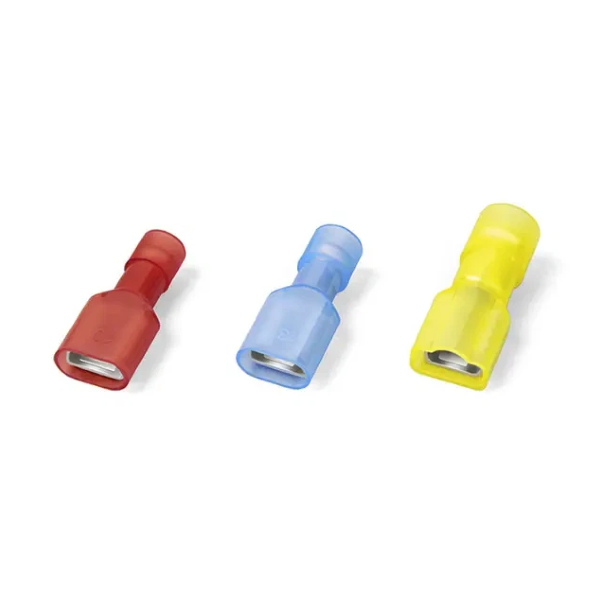
Insulated electrical wire terminals offer advantages that go beyond appearance. One of the most practical is easier handling during installation. The terminal is often simpler to position and easier to work with when the job involves repeated terminations or less convenient wiring conditions.
Insulation can also improve the finished condition of the connection. It helps create a cleaner look and adds a level of protection that is useful in environments where the wiring may face movement, handling, or general exposure. That is one reason insulated terminals are widely used in automotive service, equipment maintenance, and similar applications.
Another benefit is consistency. A product that is easier to handle often makes it easier to achieve a repeatable result. For customers trying to balance speed and reliability, that can be a real advantage.
Non insulated electrical wire terminals remain important because they solve different problems. Their smaller profile can be a better fit in tighter spaces, where excess material around the terminal would make installation more difficult. In compact layouts, that size difference can matter.
They also offer more freedom for buyers who prefer to add their own protection after crimping. When custom heat shrink or another finishing method is planned, a non-insulated terminal may be the better starting point. This gives the installer more control over the final result.
That is why insulated and non-insulated terminals should not be viewed as competing versions of the same product. Each one has an advantage in the right application. The better choice depends on the environment, the layout, and the installation method.
A terminal may have the right shape and still fail to deliver the expected result if its material quality is poor. Buyers often focus first on terminal form, but conductor material, plating, and overall build quality also influence how dependable the connection will be in use.
A well-made terminal supports a more stable crimp, a cleaner finish, and more reliable long-term performance. That is especially important in applications where the connection may face repeated service, vibration, or a more demanding working environment. Material choice also affects how the terminal performs across different wiring needs, which is why product consistency matters.
This is an important part of how customers evaluate terminal value. A better terminal is not only easier to install. It is also more likely to maintain its performance once the job is finished. FSE Tools supplies a broad range of terminal options in materials such as copper, brass, and aluminum to support different application requirements and connection needs.
The advantage of a good terminal is not limited to the first installation. It also affects what happens afterward. A poor termination can lead to loose connections, extra troubleshooting, repeat labor, and downtime that costs more than the original part ever did. A better terminal helps reduce that risk by making the connection more stable from the beginning.
This matters in both small and large jobs. In general repair work, a dependable termination saves time by reducing the chance that the same connection needs attention again soon. In repeated assembly or maintenance environments, better terminal consistency can improve workflow and reduce variation across the job.
There is also a quality impression involved. Clean, well-finished terminations make the entire wiring result look more controlled and more professional. Buyers notice that, installers notice that, and maintenance teams notice it later when they return to the work. Reliable terminations support both performance and presentation, which is part of their commercial value.
For customers comparing products, this means the benefit is not only electrical. It is operational. Better terminals can reduce rework, protect installation time, and support a more dependable finished product.
The right electrical wire terminal improves much more than the final connection point. It supports cleaner wire preparation, better fastening, easier installation, and more dependable performance over time, which is why terminal quality matters in real working conditions. FSE Tools develops connection products for practical electrical applications, and the best results usually come from matching terminal style, insulation type, and material quality to the actual job. If you want stronger, cleaner, and more consistent connections, explore our range of wire terminals and contact us for product support and application guidance.
The main benefits of electrical wire terminals include cleaner wire ends, better connection stability, easier installation, improved handling, and more dependable long-term performance.
Ring electrical wire terminals are considered reliable because they fasten securely under screws or studs, which helps create a stable connection in applications where movement or vibration may be present.
Insulated cord end terminals are especially useful with stranded wire when you need tidy insertion, better strand control, and a cleaner result in terminal blocks or panel wiring.
Yes. Non insulated electrical wire terminals are often a good choice in compact layouts or in applications where the installer wants to add custom heat shrink or another finishing method after crimping.


